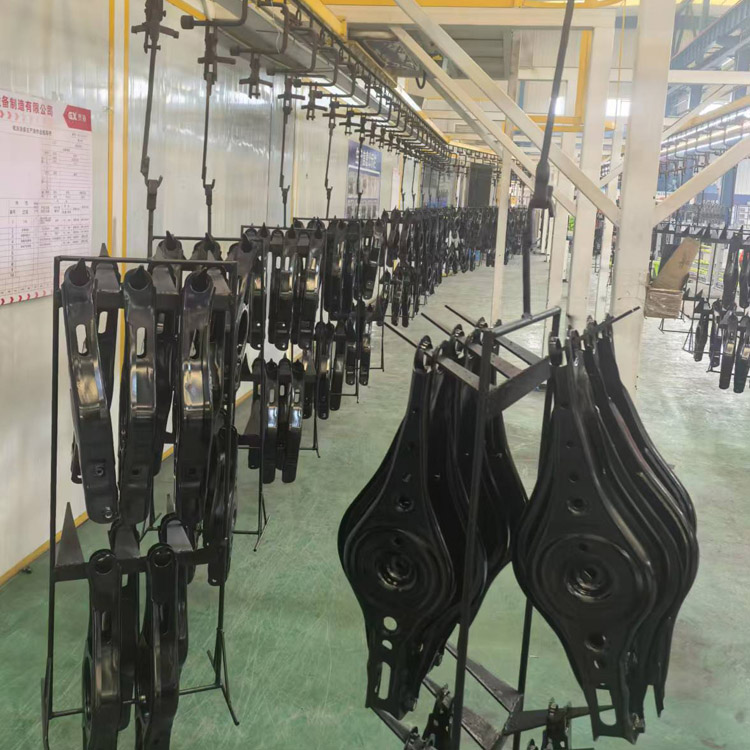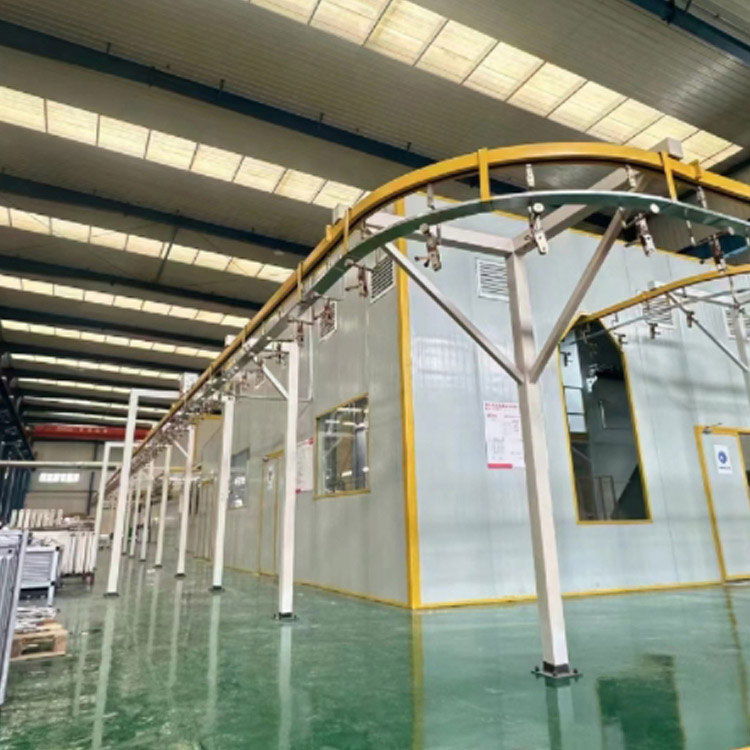

Consistent surface finishing is essential for manufacturers that need to deliver durable, attractive, and reliable products. However, traditional manual spraying often struggles with uneven coating thickness, excessive powder consumption, labor-intensive operations, and inconsistent production output. Automatic powder coating booths offer a more organized approach by combining automated spraying, controlled airflow, powder collection, and conveyor-based production.
This guide explores how automatic powder coating booths work, which production challenges they address, what equipment features matter most, and how manufacturers can select a suitable system for their facilities.
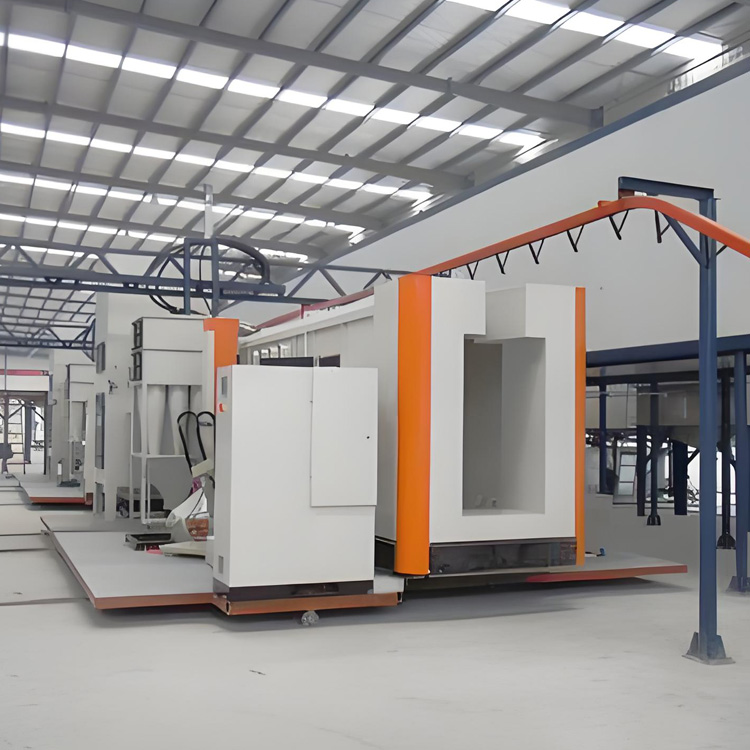
Automatic powder coating booths are specialized enclosures designed to apply dry powder coatings to manufactured components through automated spraying equipment. They are commonly integrated into conveyorized production lines, allowing workpieces to enter the booth, receive an even powder application, and continue to subsequent finishing processes.
Unlike conventional wet painting, powder coating uses dry, finely divided coating material. An electrostatic spray gun charges the powder particles, which are attracted to appropriately grounded workpieces. After application, the coated components are transferred to a curing oven, where heat melts and cures the powder into a continuous protective film.
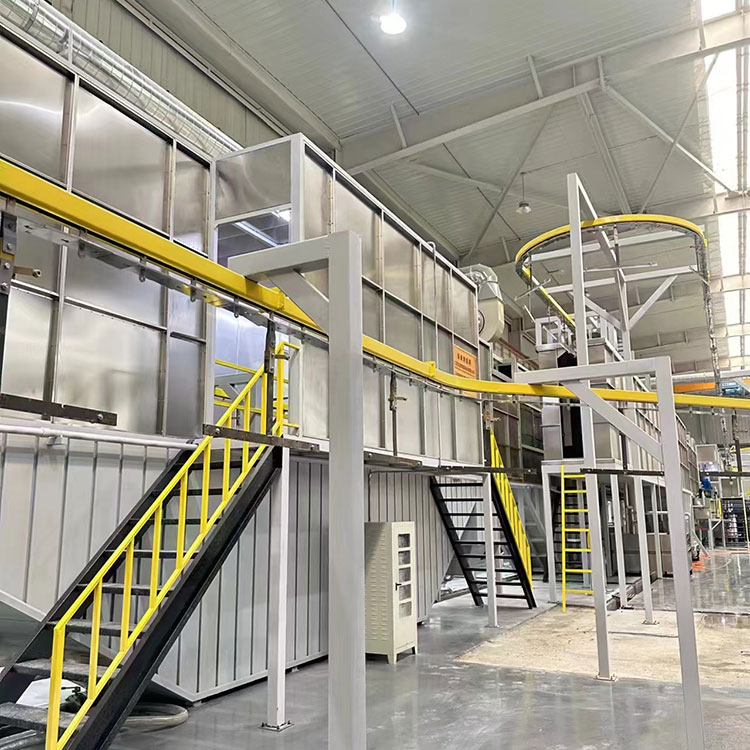
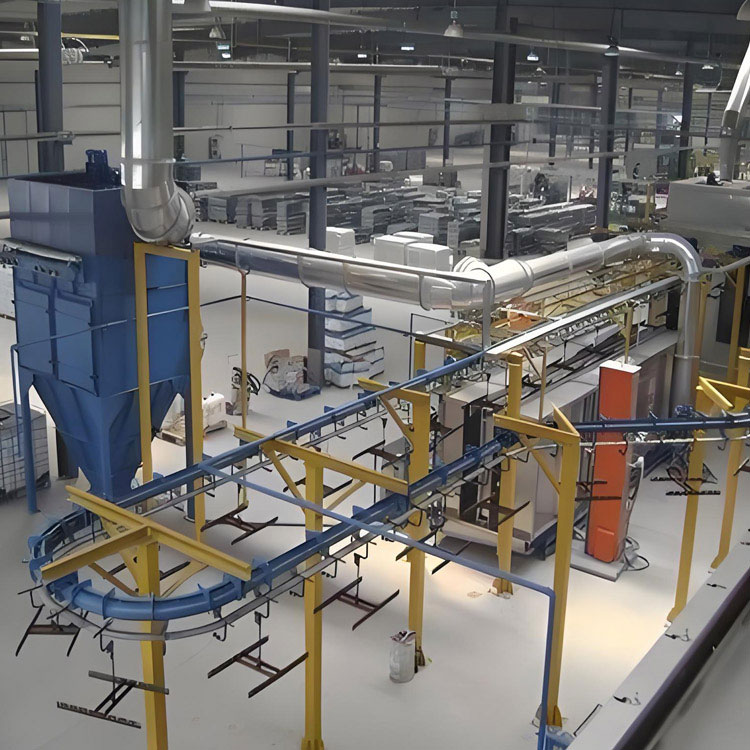
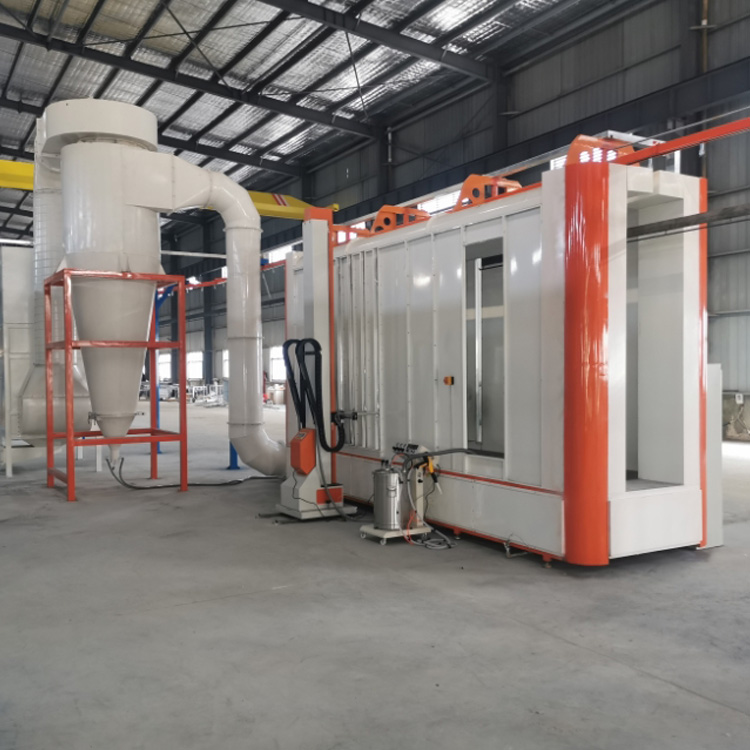
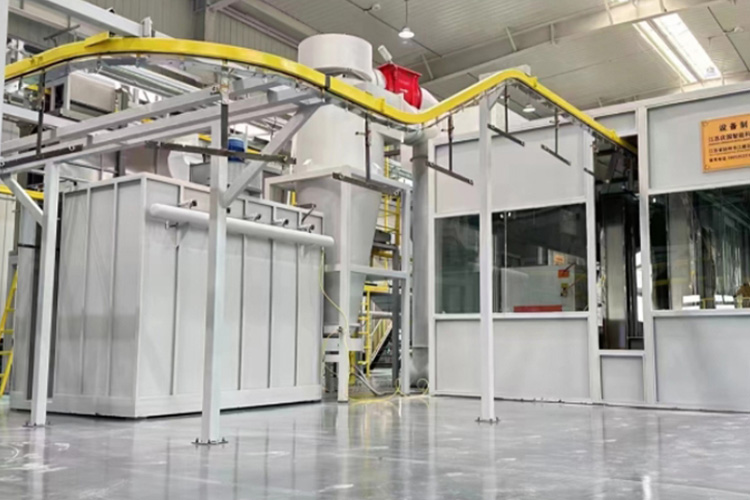
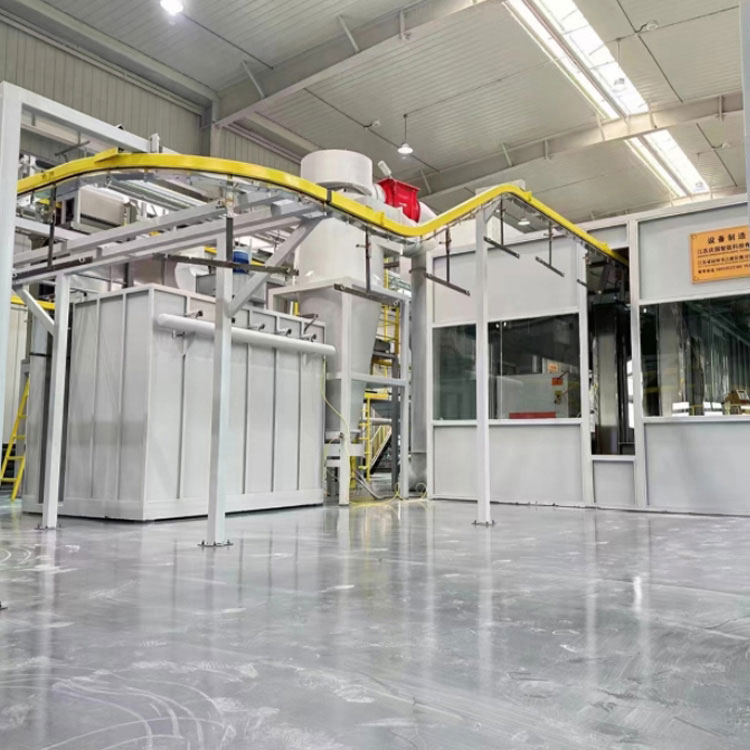
An automatic powder coating booth is not simply a spray enclosure. It is part of a coordinated finishing system that can include reciprocators, automatic spray guns, manual touch-up stations, powder feeding equipment, airflow management, cyclones, and after-filter units.
Industrial manufacturers face increasing pressure to improve production efficiency while maintaining reliable finishing quality. Manual coating methods can become difficult to manage when order quantities increase, component designs become more complex, or customers require consistent appearance across large batches.
Manual spraying depends heavily on the operator's experience, spraying distance, gun movement, and application speed. Even skilled operators may produce variations when handling large production volumes. Automatic spray systems help standardize gun movement and application parameters, reducing unnecessary differences between workpieces.
Repeated manual spraying requires continuous operator attention. For manufacturers processing hundreds or thousands of components, this can increase labor pressure and make production scheduling more complicated. Automated equipment reduces repetitive spraying tasks while allowing operators to focus on supervision, inspection, loading, and finishing corrections.
Powder that does not adhere to the workpiece can become airborne within the booth. Without an appropriate recovery and filtration arrangement, valuable coating material may be lost through the exhaust system. A properly designed powder recovery system helps collect suitable overspray for potential reuse, subject to powder compatibility and quality-control requirements.
Different operators may apply coatings using slightly different techniques. These variations can affect appearance, film thickness, and rework rates. Automatic powder coating booths help manufacturers establish more repeatable spraying conditions, making production easier to monitor and standardize.
The operation of an automatic powder coating booth involves several connected stages. Each stage contributes to the final coating result, from workpiece transportation to powder collection and curing.
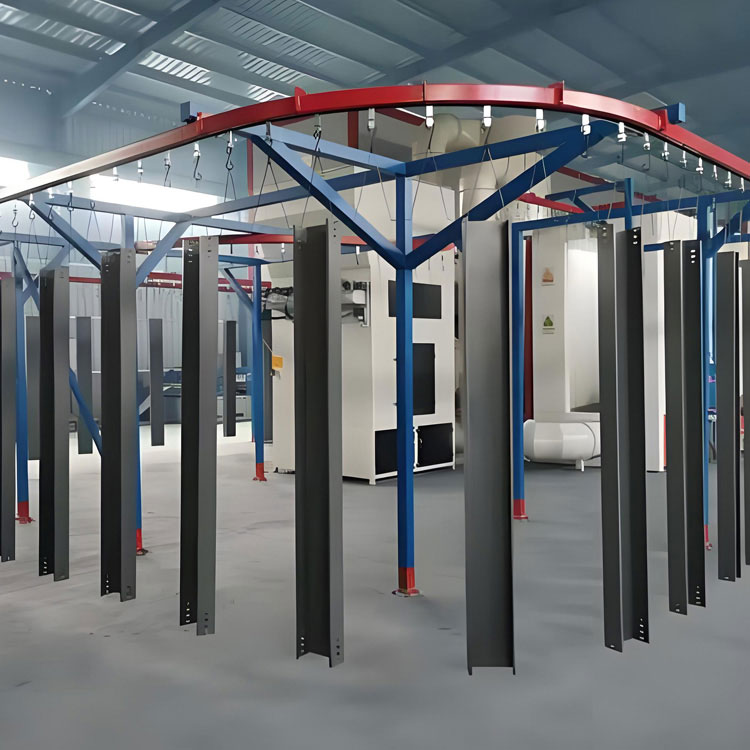
Components are loaded onto a conveyor system and transported toward the spraying booth. The conveyor keeps products moving through the finishing process at a controlled production pace. Proper spacing and positioning help provide sufficient access for automatic spray guns.
Powder is delivered from a feeding system to the spray guns. The guns electrically charge the powder particles, helping them adhere to grounded metal surfaces. Automatic guns can be mounted on reciprocators that move vertically or according to the system configuration to cover the required coating areas.
Certain components have complicated shapes, deep recesses, narrow sections, or areas that are difficult for automatic guns to reach. Manual painter stations can be incorporated into the booth so operators can correct missed areas when necessary.
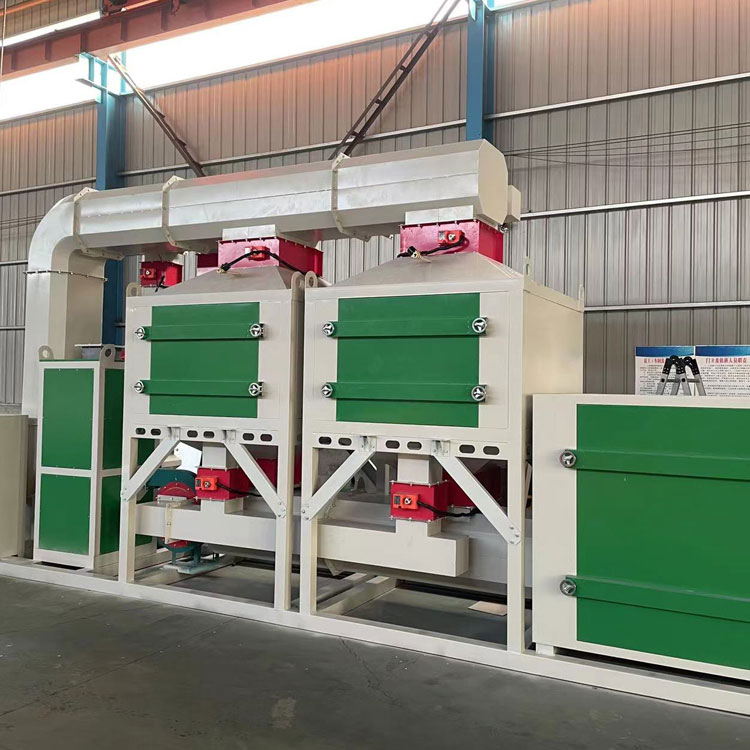
Powder that does not adhere to the workpiece is carried by controlled airflow toward the recovery equipment. A cyclone separator uses rotational airflow to separate a substantial portion of the powder particles from the air stream. Recovered powder can be returned through a suitable powder transfer arrangement.
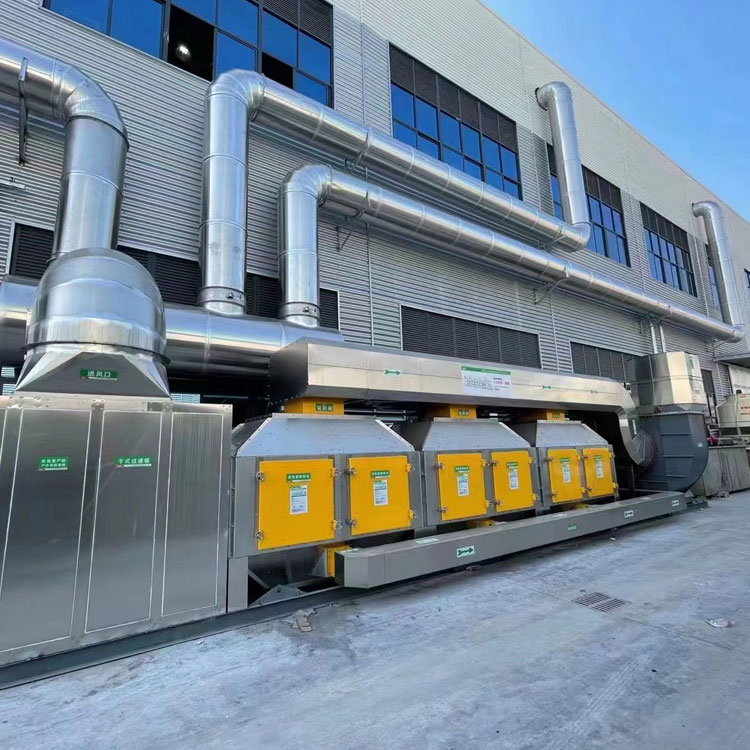
Remaining fine particles are captured by the after-filter system before the cleaned air is discharged or handled according to the plant's ventilation design. Proper filtration helps maintain a cleaner production environment and supports environmental control requirements.
After spraying, the coated workpieces move into a curing oven. The specified curing temperature and time depend on the powder manufacturer's recommendations, the substrate, and the workpiece geometry. Heat allows the powder to melt, flow, and form a finished coating.
Understanding the main equipment components helps buyers evaluate technical proposals and identify which configurations are appropriate for their production requirements.
| Component | Main Function | Purchasing Consideration |
|---|---|---|
| Booth Cabinet | Provides the enclosed spraying workspace. | Dimensions, material, structural design, and accessibility. |
| Automatic Spray Guns | Apply electrostatically charged powder. | Spraying coverage, gun configuration, and compatibility. |
| Reciprocators | Move automatic spray guns to cover workpieces. | Travel range, movement control, and product dimensions. |
| Conveyor System | Transports workpieces through production stages. | Load capacity, speed, layout, and workpiece spacing. |
| Cyclone Separator | Separates a large portion of oversprayed powder. | Separation efficiency and powder recovery compatibility. |
| After-Filter Unit | Captures remaining fine powder particles. | Filtration capacity, filter maintenance, and airflow. |
| Powder Feeding System | Supplies powder to the spraying equipment. | Stable delivery, material compatibility, and cleaning. |
| Control System | Coordinates equipment operating parameters. | Operating logic, adjustment convenience, and safety interlocks. |
The cabinet structure directly affects equipment durability, cleaning convenience, and installation flexibility. For example, the automatic powder coating booth configuration presented by Jiangsu Qingguo Intelligent Technology Co., Ltd. uses an AISI 304 stainless steel cabinet frame with a stated thickness of 1.5–2 mm. Its bolted, demountable construction is designed to facilitate assembly and disassembly when required.
Buyers should confirm the actual material specifications, structural dimensions, and construction details of the proposed configuration rather than assuming that every booth has identical features.
Both automatic and manual powder coating methods have their place in industrial production. The right choice depends on production volume, product geometry, available labor, finishing requirements, and investment plans.
| Comparison | Automatic Powder Coating | Manual Powder Coating |
|---|---|---|
| Operation | Automated gun movement and coordinated production. | Primarily controlled by operators. |
| Production Volume | Suitable for repetitive, medium- to high-volume production. | Suitable for smaller batches and varied jobs. |
| Consistency | Supports repeatable spraying parameters. | Depends more heavily on operator technique. |
| Labor | Reduces repetitive spraying tasks. | Requires more direct spraying labor. |
| Flexibility | Requires appropriate setup for product changes. | Can adapt quickly to certain irregular components. |
| Initial Investment | Generally higher due to automation and integration. | Generally lower for basic configurations. |
Automatic spraying is often attractive for manufacturers with standardized products and continuous production requirements. Manual spraying remains valuable for complex components, low-volume orders, and finishing corrections.
In practice, a hybrid configuration can provide a useful balance. Automatic guns handle the main coating workload, while manual stations allow operators to reach difficult areas and correct coverage where necessary.
Automatic gun movement helps maintain more repeatable spraying distances, angles, and movement patterns. When combined with stable conveyor operation and appropriate spray settings, the system can reduce coating variations between production batches.
Consistency is particularly important for products with visible exterior surfaces, matching components, or demanding customer appearance standards.
Conveyorized operation allows manufacturers to organize multiple production stages into a continuous workflow. Workpieces can move through spraying and curing without requiring operators to manually transport each component between separate work areas.
Cyclone recovery and after-filter arrangements help manage oversprayed powder. Depending on powder characteristics, equipment design, and contamination control, suitable recovered material may be reused. This can reduce avoidable material waste and improve overall powder utilization.
Automation can reduce repetitive manual spraying operations and help manufacturers allocate labor more effectively. Operators can concentrate on monitoring, quality inspection, equipment adjustment, and other production responsibilities.
A properly designed booth provides a defined spraying area with dedicated airflow and powder collection arrangements. Combined with suitable housekeeping, ventilation, and workplace safety procedures, it helps manufacturers maintain better control over the coating environment.
As demand increases, manufacturers may need to increase conveyor speed, adjust gun arrangements, or expand production capacity. An appropriately planned automatic coating line provides a structured foundation for future production improvements.
Purchasing an automatic powder coating booth is a significant equipment decision. Selecting a system based only on its price or advertised automation level may lead to problems after installation. Buyers should evaluate the complete production process before confirming a configuration.
Start by identifying the maximum and minimum workpiece dimensions, weight, shape, and surface characteristics. Long profiles, flat panels, metal cabinets, and irregular components may require different booth dimensions and gun arrangements.
Pay particular attention to recessed areas, internal corners, narrow openings, and complex geometries. These details influence spray gun positioning and whether manual touch-up stations are necessary.
Determine the number of components that must be coated per shift or per day. Production capacity should be considered together with conveyor speed, component spacing, spraying time, curing requirements, and planned equipment downtime.
Ask how the cyclone separator and after-filter work together. Important considerations include powder characteristics, airflow requirements, recovery arrangements, filter replacement, and the management of mixed or contaminated powder.
The booth must fit the available factory layout while providing sufficient access for operators and maintenance personnel. Buyers should also consider conveyor connections, electrical supply, compressed air, ventilation routes, and downstream curing equipment.
Manufacturers producing multiple colors need to understand how quickly the booth and powder delivery system can be cleaned between batches. Booth accessibility, removable components, powder collection arrangements, and cleaning procedures can significantly influence changeover time.
Powder coating involves combustible dust considerations and electrostatic equipment. The proposed installation should be assessed against applicable local regulations and relevant standards. Buyers should confirm grounding, ventilation, dust collection, fire and explosion protection measures, electrical suitability, and required safety interlocks with qualified equipment suppliers and safety professionals.
Even a well-designed automatic powder coating system requires correct setup and routine monitoring. Understanding common coating problems helps production teams identify the source of defects before they affect large batches.
| Common Problem | Possible Causes | Practical Solutions |
|---|---|---|
| Uneven coating thickness | Incorrect gun positioning, unstable spraying parameters, or poor grounding. | Check gun distance, movement, voltage settings, and grounding continuity. |
| Missed coating areas | Complex geometry or insufficient spray gun coverage. | Adjust gun arrangement and consider manual touch-up. |
| Excessive powder waste | Unsuitable spraying parameters or inefficient recovery arrangements. | Inspect powder delivery, airflow, cyclone operation, and filter condition. |
| Poor surface appearance | Contaminated surfaces, unsuitable powder conditions, or incorrect curing. | Review pretreatment, powder handling, and curing parameters. |
| Frequent filter blockage | High powder loading or inadequate filter maintenance. | Check filter condition, cleaning cycles, and airflow design. |
| Color contamination | Residual powder remaining after color changes. | Improve cleaning procedures and inspect powder-contact surfaces. |
A useful troubleshooting strategy is to examine the entire finishing process rather than adjusting spray gun settings immediately. Surface preparation, grounding, compressed air quality, powder condition, booth airflow, and curing parameters can all affect final coating quality.
Proper installation and maintenance are essential for stable long-term operation. Before commissioning, manufacturers should ensure that the booth, conveyor, spraying equipment, powder recovery system, and related utilities are compatible with the approved production layout.
Maintenance frequency should follow the equipment manufacturer's instructions and actual operating conditions. A practical maintenance program may include the following activities:
Maintenance records are also valuable. Recording filter replacement, cleaning activities, equipment adjustments, and production issues helps maintenance teams identify recurring problems and plan preventive servicing.
Automatic powder coating booths are used in a wide range of manufacturing sectors where metal components require decorative finishes, corrosion protection, or durable surface coatings.
Metal cabinets, shelving systems, office furniture, and storage equipment often require uniform surface finishes across multiple production batches. Automatic spraying helps manufacturers maintain consistent product appearance.
Automotive metal parts and related components may require controlled coating processes to meet appearance and performance specifications. Automated booths can support repetitive production operations and standardized finishing procedures.
Electrical cabinets, distribution boxes, and control panel housings commonly require durable coatings. Appropriate gun positioning and manual touch-up can help address difficult areas and complex component structures.
Aluminum and steel profiles, metal frames, building accessories, and architectural components can benefit from organized powder coating production lines, especially when products are manufactured in repeated sizes and finishes.
Metal fabricators producing brackets, frames, machine covers, and fabricated assemblies can use automatic powder coating equipment to improve finishing consistency and organize larger production workloads.
Selecting the right supplier is just as important as selecting the right equipment. An experienced coating equipment manufacturer should understand how individual components work together and how different production requirements affect system design.
Jiangsu Qingguo Intelligent Technology Co., Ltd. specializes in industrial coating equipment and related production line solutions. Its product range includes powder spraying equipment, automatic painting equipment, electrophoresis production lines, coating pretreatment equipment, and waste gas treatment equipment.
For buyers evaluating automatic powder coating booths, a suitable supplier should be able to discuss practical engineering details, including:
Buyers should also request technical drawings, configuration details, applicable equipment specifications, and a clear quotation. Comparing these details helps determine whether a proposed system meets actual production needs rather than simply comparing equipment prices.
An automatic powder coating booth is an enclosed spraying area equipped with automated powder application equipment. It is commonly integrated with conveyors, reciprocators, powder feeding systems, and recovery equipment to support continuous industrial coating operations.
Workpieces enter the booth through a conveyor system. Electrostatic spray guns apply charged powder to grounded surfaces, while airflow carries excess powder toward the recovery and filtration equipment. The coated workpieces then move to a curing oven to complete the finishing process.
Yes, depending on booth design, spray gun positioning, and component geometry. However, deep recesses and difficult-to-reach areas may require additional spray guns, optimized reciprocator movement, or manual touch-up stations.
A cyclone separator uses rotational airflow to separate a large portion of oversprayed powder from the air stream. The collected powder may be returned to the powder feeding system when its condition and quality meet the applicable reuse requirements.
Suitable recovered powder can often be reused, provided that it is compatible with the original material and meets quality requirements. Contaminated powder or powder collected from mixed colors should not be reused without appropriate evaluation.
Price depends on booth dimensions, construction materials, automatic gun quantity, reciprocator configuration, conveyor integration, cyclone recovery equipment, filtration capacity, control systems, and customization requirements. Installation and auxiliary equipment can also influence the total project cost.
It can be suitable when production volume and labor requirements justify the investment. Smaller manufacturers should evaluate available floor space, product quantities, color change frequency, and future expansion plans before choosing an automated configuration.
Cleaning frequency depends on operating hours, powder type, production volume, and color change requirements. Regular inspection and cleaning should follow the equipment manufacturer's maintenance instructions to prevent powder buildup and cross-contamination.
Buyers should provide workpiece dimensions, product photographs or drawings, material types, production capacity targets, powder specifications, factory layout, and automation requirements. These details help the manufacturer recommend an appropriate equipment configuration.
Important considerations include coating requirements, booth dimensions, spraying coverage, recovery efficiency, filtration design, installation conditions, safety provisions, maintenance accessibility, and supplier technical support.
Automatic powder coating booths play an important role in modern industrial surface finishing. By integrating electrostatic spraying, conveyor transportation, automatic gun movement, manual touch-up options, and powder recovery equipment, manufacturers can establish a more consistent and organized production process.
However, achieving reliable results requires more than purchasing an automated booth. Workpiece geometry, spraying parameters, powder characteristics, airflow, filtration, curing conditions, and maintenance procedures must all be considered as part of the complete coating system.
For manufacturers planning to upgrade their existing finishing facilities or establish a new automated coating line, selecting a properly configured solution can help address production bottlenecks, improve coating consistency, and support long-term operational development.
Every manufacturing facility has different coating requirements. Whether you need a customized automatic powder coating booth, an integrated powder spraying system, or a complete industrial coating production line, choosing the right equipment configuration is essential for achieving dependable finishing results.
Jiangsu Qingguo Intelligent Technology Co., Ltd. is ready to discuss your application, production capacity, workpiece specifications, and equipment requirements.
Contact us today to discuss your project and request a customized equipment solution.
Website: Automatic Powder Coating Booths
Email: qingguo@coating-lines.com
Tel: +86-18952533789
Related Topics: Automatic Powder Coating Booths | Industrial Powder Coating Equipment | Automatic Powder Spraying System | Powder Recovery System | Automatic Coating Production Line
-